Action Photography
December 1, 2025 Masahiro Hiroike
日本語版はこちらです
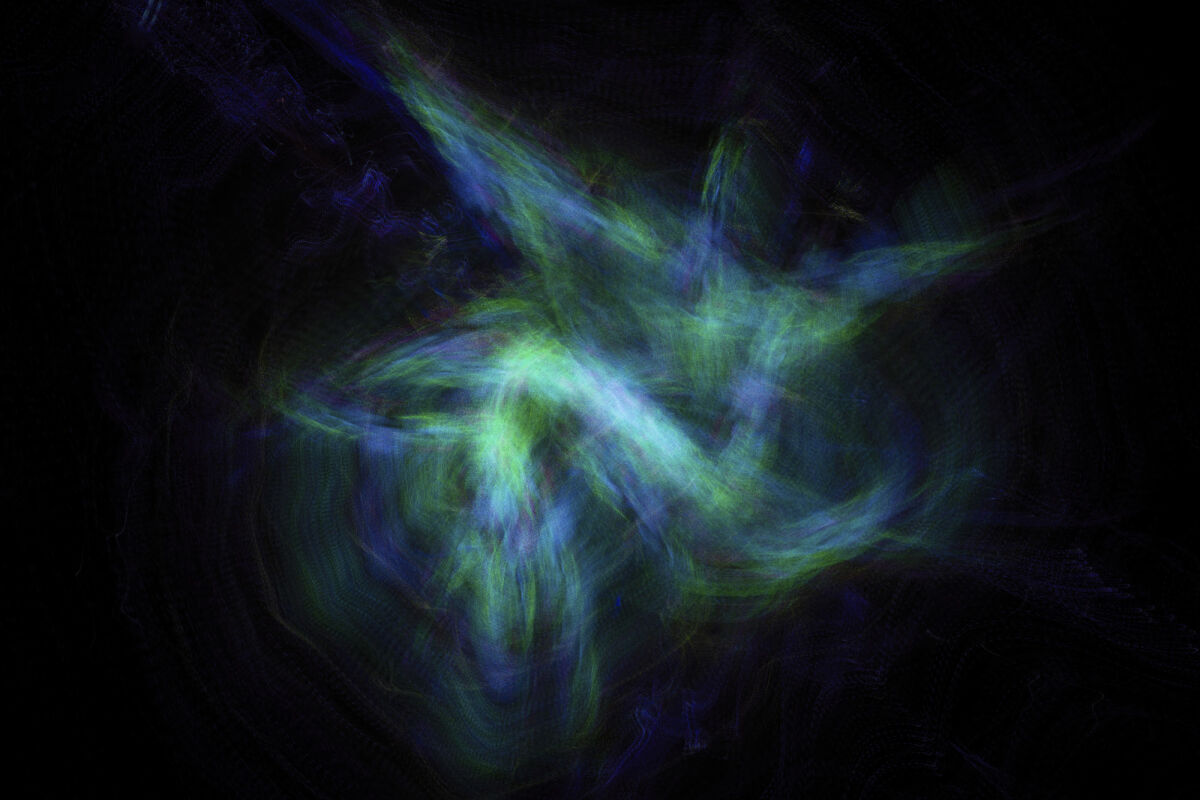
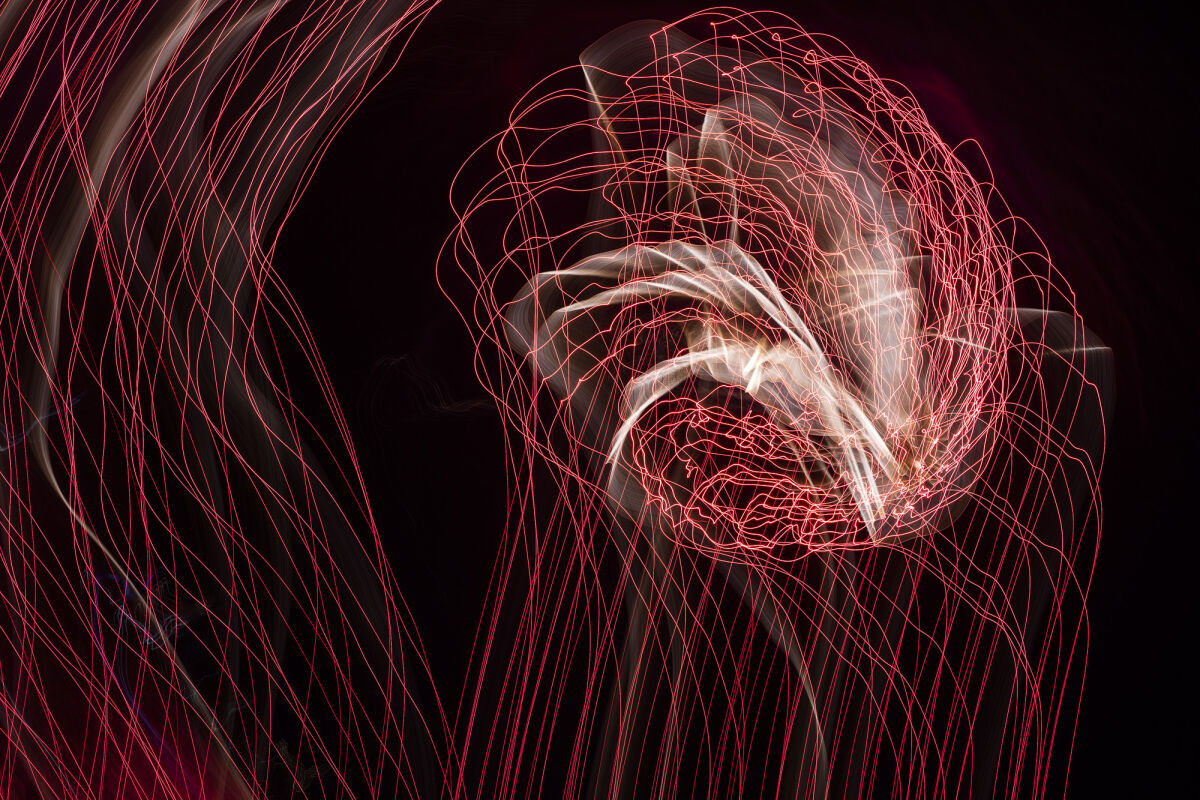
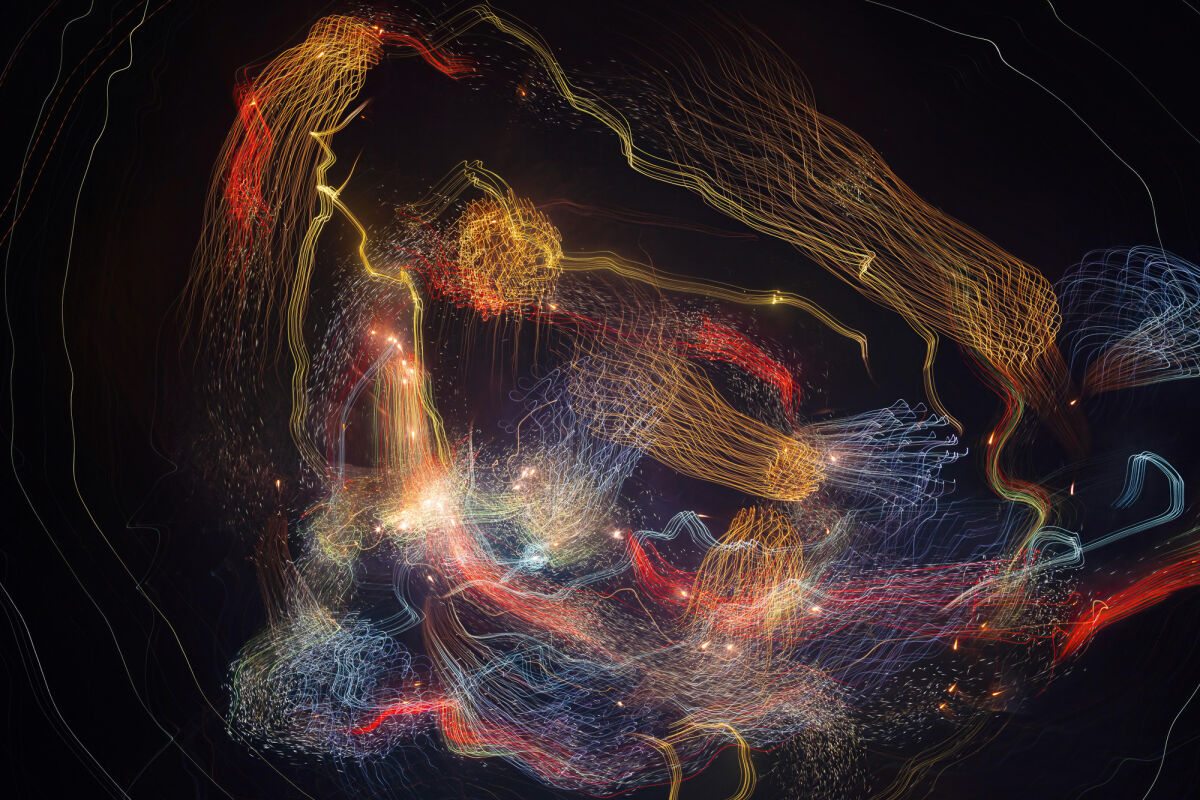
The painter Jackson Pollock created "action painting" as an extension of Surrealism. Hiroike also extends "digital photography surrealism" by placing ICM (Intentional Camera Movement) at the heart of his photographic technique, and by "shooting as if dancing," he actively incorporates physicality and chance, establishing these as "traces of action," a new form of photographic expression he declares as "Action Photography"
What is Action Painting?
Jackson Pollock established "Action Painting" as an evolution of Surrealism. While it belongs to the lineage of automatism (automatic drawing)—a quintessential Surrealist technique—Pollock’s method involves no sketches or prior conceptions. Instead, he painted through the acts of dripping and splashing pigment, moving rhythmically as if dancing, guided by subconscious intuition.
In this process, the physical properties of the medium—such as the viscosity of the paint and the pull of gravity—interact with chance, rendering bodily movement onto the canvas as abstract trajectories. Pollock’s practice was a revolutionary attempt to redefine painting, shifting it from a "material representation" to a "record of an act," and moving the gravity of artistic creation from the result to the process.
About ICM (Intentional Camera Movement)
ICM is a photographic technique involving the deliberate movement of the camera during exposure. In "panning," often used in motorsports, the camera moves in sync with the subject's speed to keep the subject sharp while blurring the background.
In contrast, ICM "blurs" both the subject and the background, creating an image fundamentally different from traditional photographic reproduction. The resulting image varies greatly depending on the nature of the subject, the speed of movement, and the intensity of light.
ICM of Nature and Landscapes
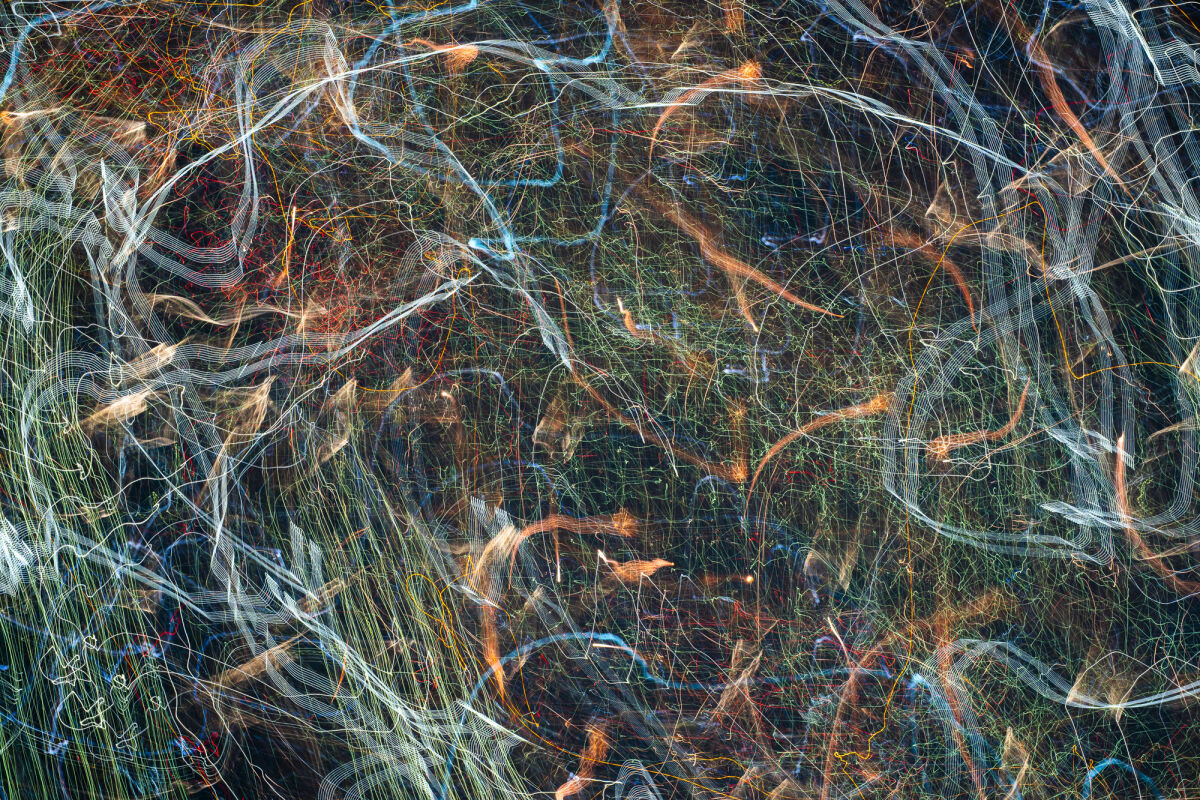
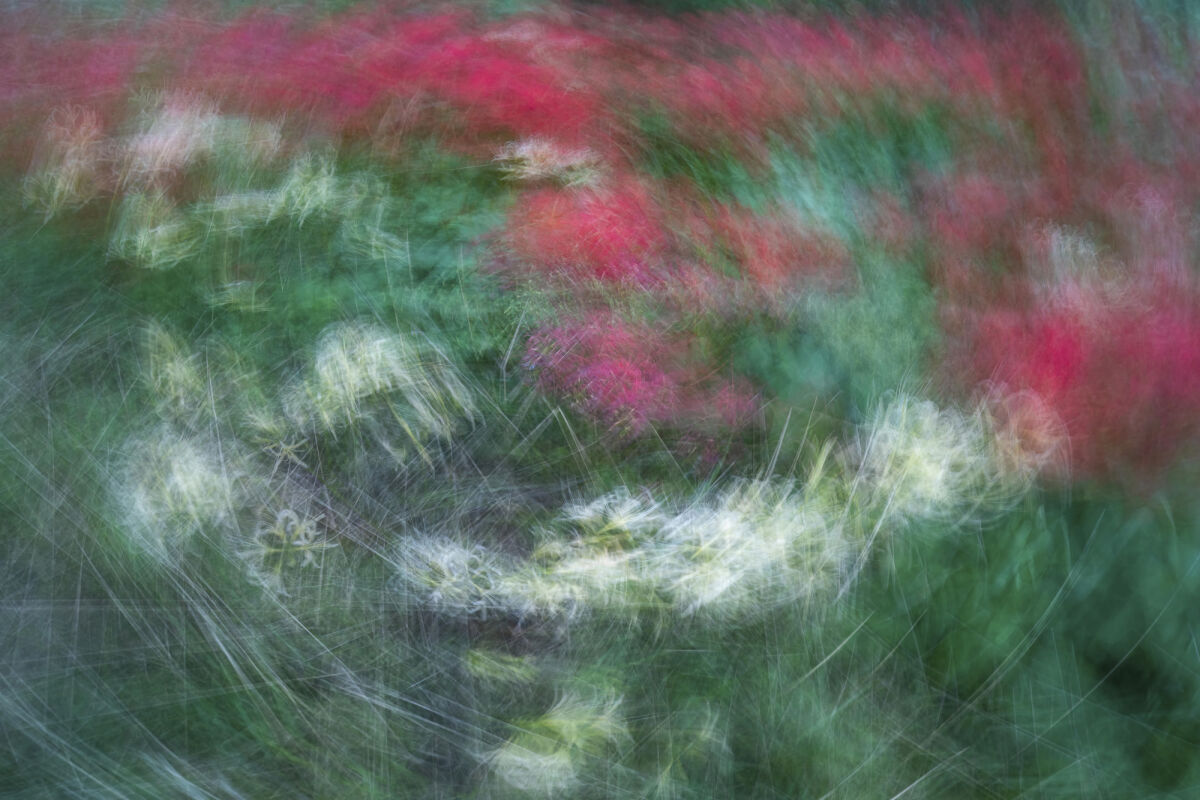
By capturing natural objects like plants or landscapes with relatively short camera movements, the subject and background blend together. This creates an Impressionistic effect where outlines become blurred. Photographer Dr. Kah-Wai Lin has documented this method in his work on "Impressionistic Photography with Slow Shutter Speeds."
https://nisifilters.jp/blogs/magazine/impressionist-photography
ICM with Intense Light
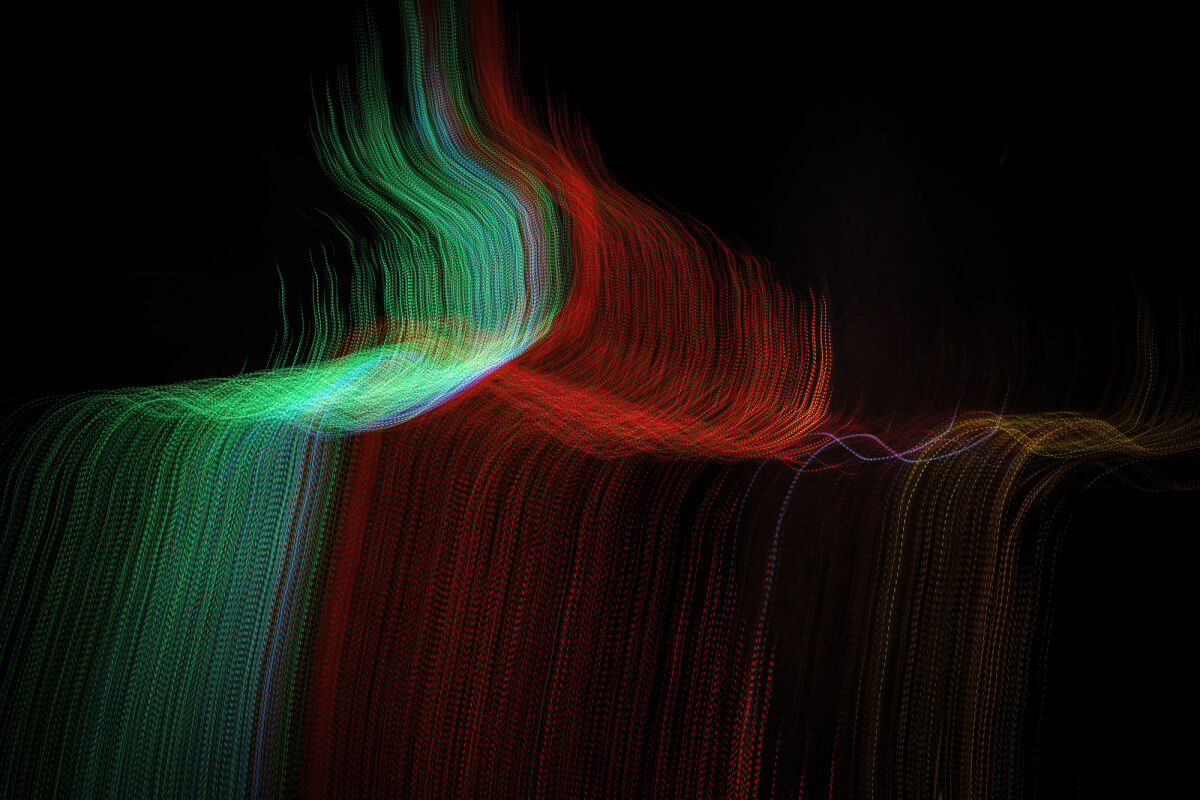
When capturing strong light sources—such as Christmas illuminations or fireworks—or high-contrast landscapes, the light is transformed into "continuous trajectories," expressed as vivid lines. Light is stretched along the time axis, and its changes are recorded in detail. To use a painting metaphor, this is akin to holding countless pens upright and moving the canvas against them. In essence, "ICM with intense light" is "photography that paints."
What is Action Photography?
Hiroike proposed "Digital Photography Surrealism" by leveraging the unique characteristics of digital cameras: the ability to capture a vast number of frames and the capacity to review, adjust, and reshoot instantly.
"Action Photography" utilizes a specific process within this framework—adjusting and reshooting based on images born of chance—and places "ICM with intense light" at its center. By moving the camera rhythmically and shooting as if dancing, the artist actively embraces physicality and serendipity, fixing these elements as the "traces of an act."
With ICM, images are born of chance by freely moving the camera. With a digital camera, you can instantly check the image, adjust it, and retake it. Specifically, you shoot freely, incorporating chance, and then adjust and retake it when you feel something intuitively.
Shoot freely > Shoot freely > Feel intuitively > Adjust and shoot > Adjust and shoot
Through this process, you can capture the image born by chance with your subconscious aesthetic and reconstruct it according to the artist's intention..
Specific Expressions of Action Photography
ICM • Christmas Lights (Illumination)
One of Hiroike's chosen "strong lights" is Christmas lights. Winter in Japan, cities are decorated with countless LEDs, and Japanese people played a major role in their development. LEDs flicker at an alternating current frequency, but when photographed with an ICM, their light trails appear as dotted lines. With a single shutter click, the trails of thousands, or even tens of thousands, of flickering LED lights overlap, and because they are dotted lines, they become intricately intertwined. Add to this the movement of the camera (i.e., the body), and the results are difficult to predict, creating abstract, mystical images reminiscent of unintended natural landscapes or the cosmos. However, because the LED lights are fixed, the trails are purely physical movements, depicting the speed, rhythm, and breathing of the movements as "trajectories of action."
ICM • Fireworks
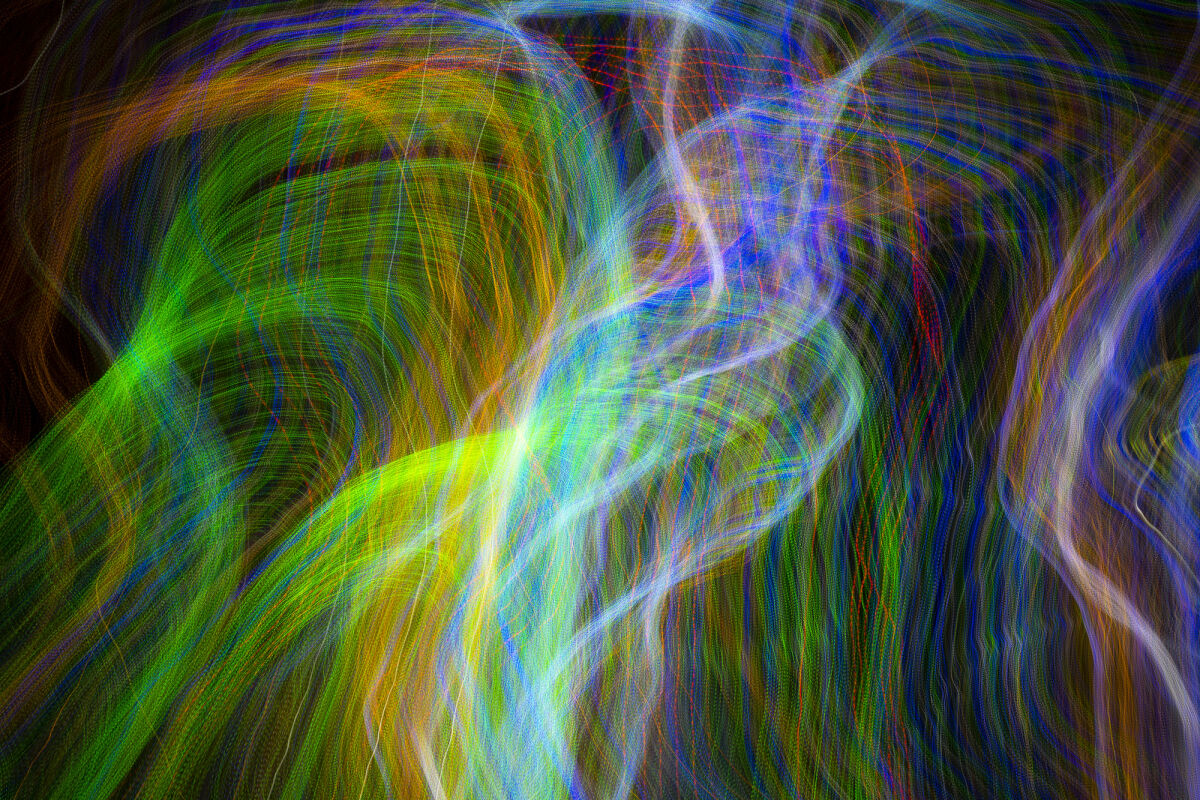
Fireworks, launched on summer nights, are a symbol of summer in Japan. Large fireworks are made up of a cluster of smaller sparks that explode into the sky, instantly spreading out in concentric circles before disappearing. Conventional photography captures these as a single, circular image, unable to capture the delicate sparks, their explosions, and their fading. However, with ICM, the flickering of the sparks is stretched out over time, capturing the entire process in detail, from the moment they burst to the moment they fade. While the fireworks may be launched in succession, each one represents a different type of firework, with the way the sparks split, moving at different speeds and angles. The unpredictable variety of fireworks and their explosive energy, combined with the free-flowing camera movements, creates complex aleatoric effects, resulting in abstract yet organic images that evoke the universe and even mythical creatures. This process is similar to action painting, which combines the random effects of physical properties such as the viscosity and gravity of thrown paint with physical movement.
The Significance of Action Photography
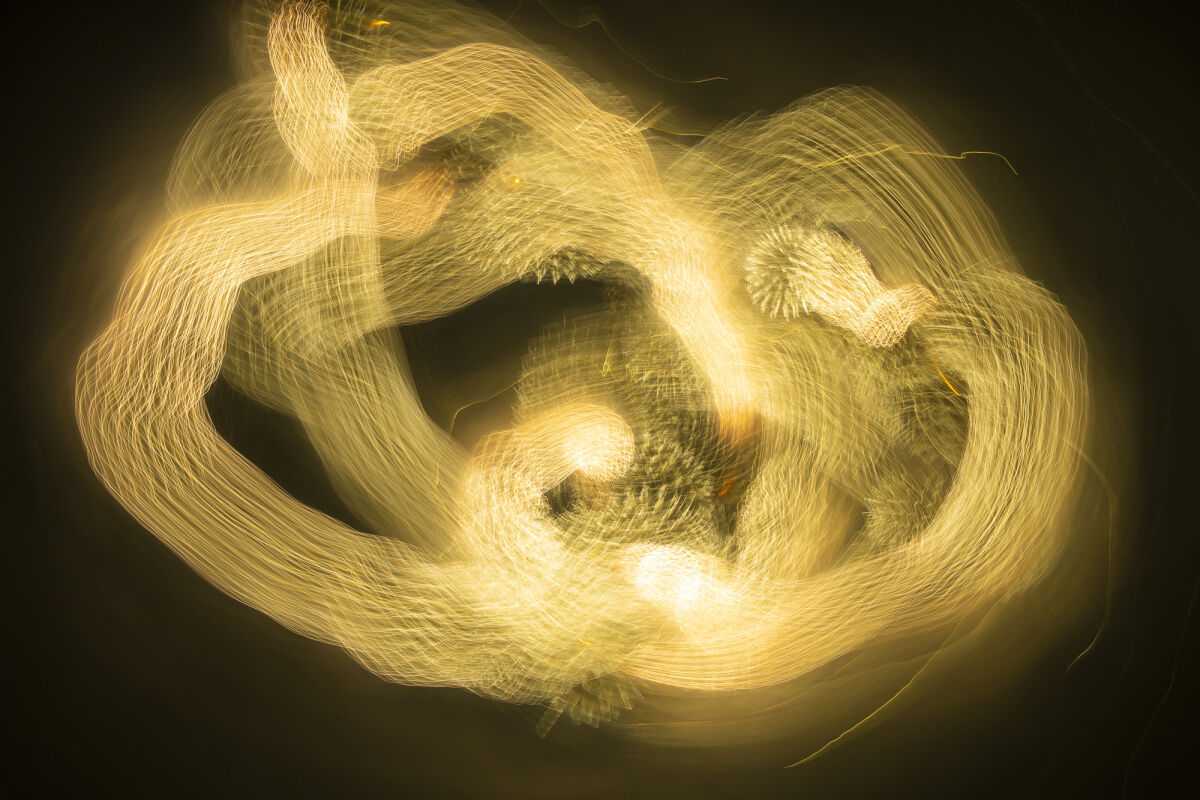
Since the 20th century, photography has long been defined as a medium for accurately capturing real moments. However, "action photography" places ICM (Intensional Camera Movement), the active movement of the camera, at its core. It is a form of "drawing photography" that captures the photographer's physical movements, rhythm, and breathing as "traces of light." This approach repositions photography from a "record of an event" to a "trace of an action," attempting to break new ground within the framework of photographic history.
While "action painting" utilizes the physical properties of paint, such as the viscosity and gravity, to engage with the unconscious while painting, elevating physicality into abstract works, "action photography" utilizes the continuity of light and the elongation of time as its medium. Taking advantage of the immediacy inherent in digital photography, it captures unconscious beauty through repeated shooting and adjustments, transforming physical movements into abstract trajectories. While the two styles use different media, they share a common philosophical foundation: "expressing unconscious beauty through physical action and chance." In other words, "action photography" is nothing less than a contemporary response from the perspective of photographic expression to action painting.
Furthermore, until now, the characteristics of the "digital camera" itself have rarely been discussed in art history. However, the fact that "action photography" has presented a realm of expression that is only possible with a digital camera suggests that the digital camera could become a new nexus of expression in art history.
Collection of Works