
Hanabi
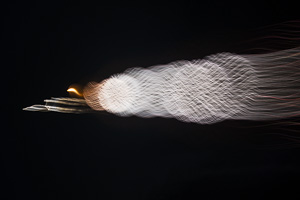
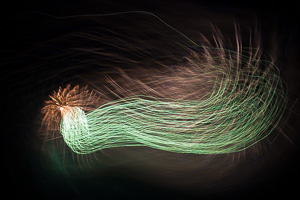
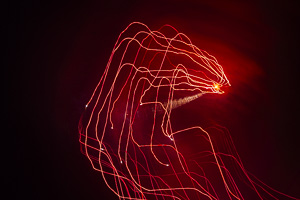
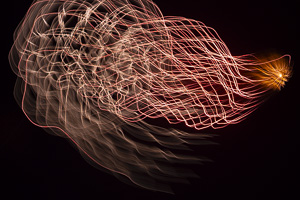
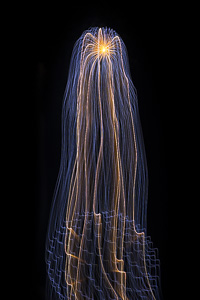
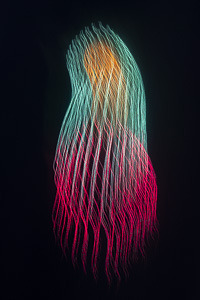
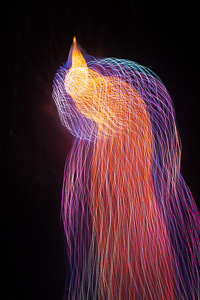
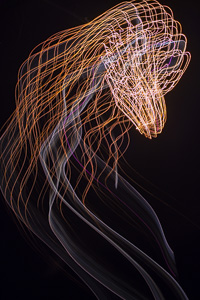
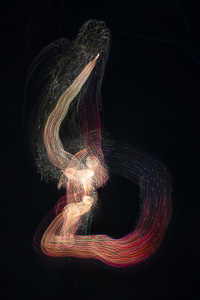
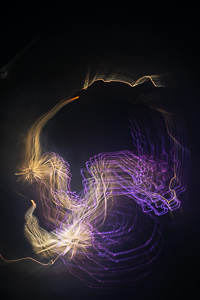
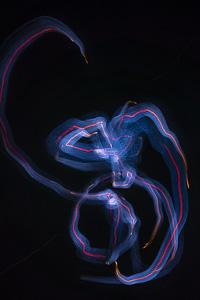
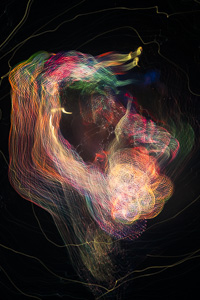
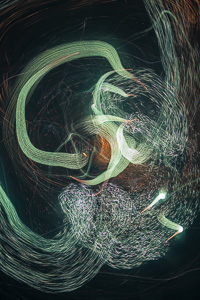
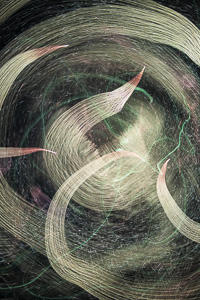
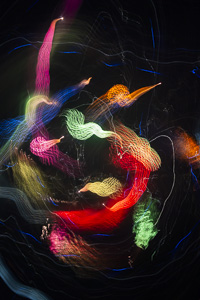
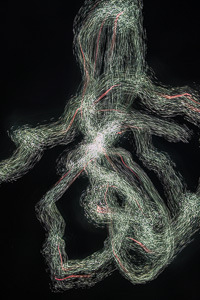
Fireworks launched on summer nights are a quintessential symbol of Japanese summer. While vibrant in color, fireworks, which burst and disappear in an instant, are also fleeting, and are launched during the Obon period, a time to welcome ancestors and appease their spirits. In other words, fireworks symbolize the Japanese aesthetics of "miyabi" (elegance) and "mono no aware" (the pathos of things), and their transience highlights the beauty of "miyabi."
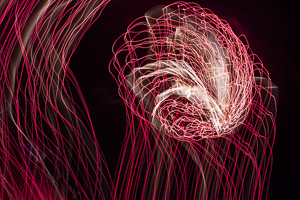
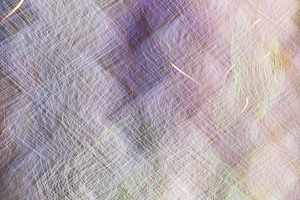
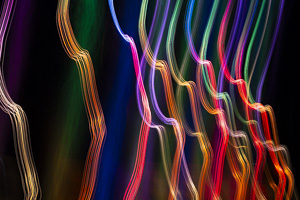
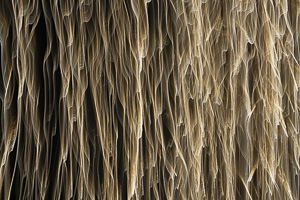
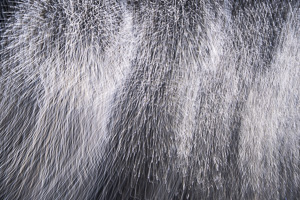
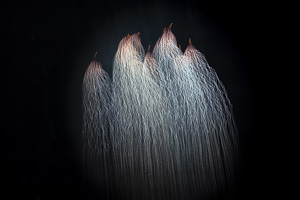
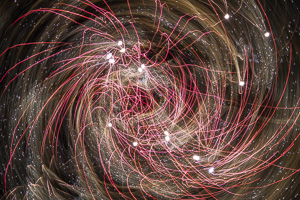
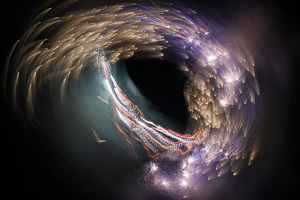
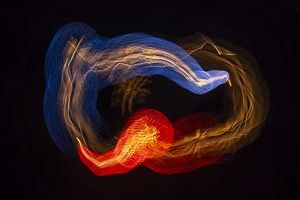
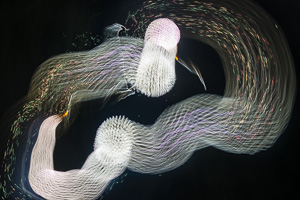
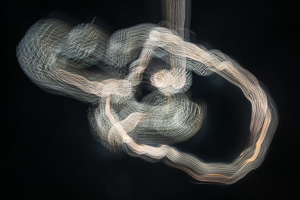
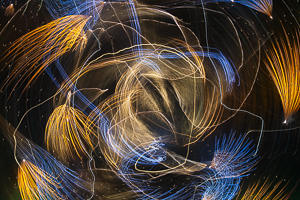
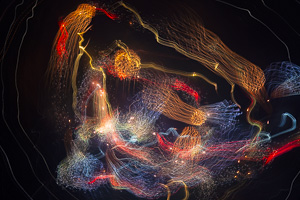
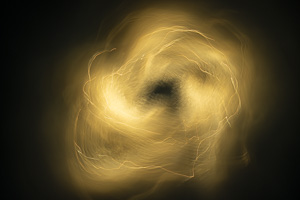
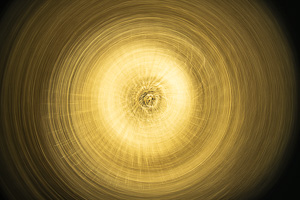
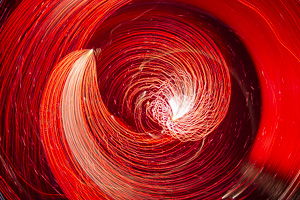
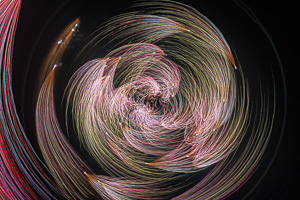
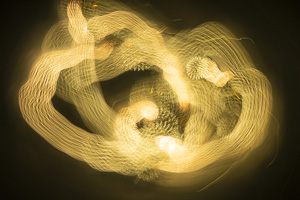
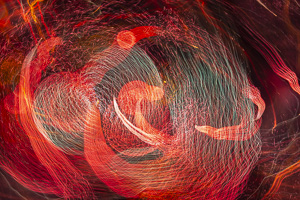
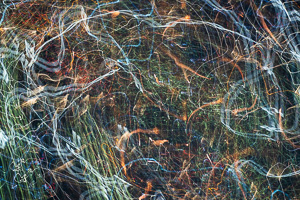
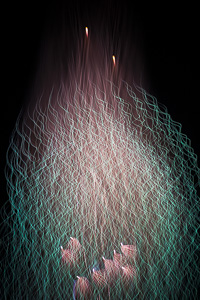
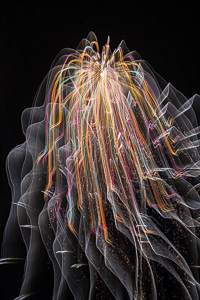
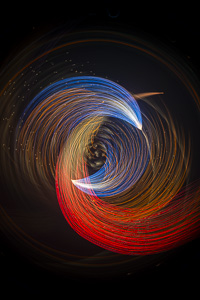
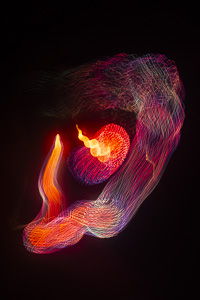
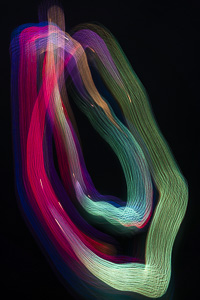
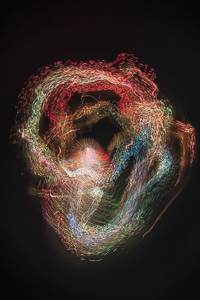
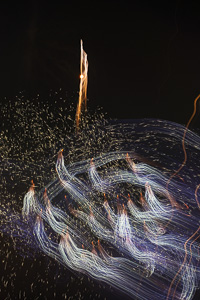
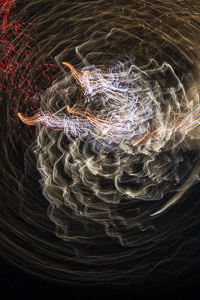
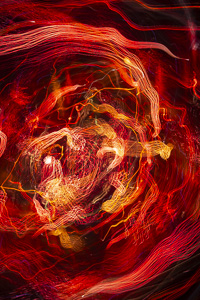
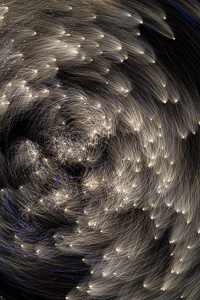
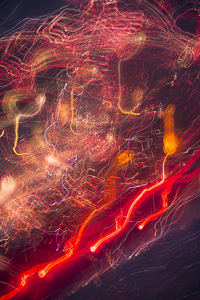
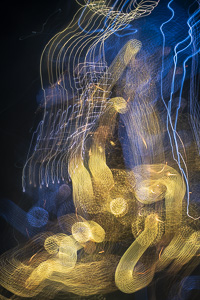
Large fireworks are made up of many smaller fireworks, which, when launched into the sky, spread out in concentric circles in an instant and then disappear. However, in a normal photograph, these appear as a single circular mass, failing to capture the delicate sparks, the bursting, and the fading. Therefore, I photograph fireworks using a technique called ICM (Intentional Camera Movement), meaning I move the camera while shooting. When photographing fireworks while moving the camera, the fireworks appear relatively faster and are captured as lines in the photograph. In other words, like a seismograph, I can stretch the flashing over time and capture it in detail.
Furthermore, while fireworks displays may sometimes occur in succession, the types of fireworks change each time, and the way the sparks split, their speed of movement, and their angles vary depending on the type of firework. The unpredictable variety of fireworks, their explosive energy, and the free movement of the camera create a complex sense of chance, producing abstract yet organic images that evoke even the universe or imaginary creatures. It is similar to the process of action painting, where paint is thrown, and the chance created by its physical properties such as viscosity and gravity is combined with bodily movement.
I have named this "Action Photography". It centers on "ICM (Intense Compression Photography) with strong light" as the photographic technique, and uses a method of "adjusting and reshooting based on photographs with a sense of chance" to express "unconscious beauty." By rhythmically moving the camera and shooting as if dancing, it actively incorporates physicality and chance, fixing them as "trajectories of action" in its photographic expression.
夏の夜に打ち上げられる花火は日本の夏の風物詩です。色鮮やかな花火ですが、一瞬開いて消える花火は儚いものでもあり、鎮魂の意味で先祖を迎える「お盆」の時期に打ち上げられています。つまり花火は「雅(みやび)」と「もののあはれ」という日本人の美意識を象徴するもので、その「儚さ」が「雅」の美しさを際立たせています。
大きな花火は小さな花火が集まって出来ていて、空に打ち上るとそれらは一瞬で同心円状に広がりやがて消えていきます。しかし通常の写真ではそれらは円状に一体となって写り、細やかな火花や弾ける様子と消えゆく様子は表現できません。そのため私は花火をICM(Intentional camera movement)という手法、つまりカメラを動かしながら撮影しています。カメラを動かしながら花火を撮ると、花火は相対的に早く動いて写真には線として写ります。つまり地震計のようにその明滅を時間軸で伸ばして詳細に写し撮る事が出来るのです。
また、打ち上げ花火は少し連続する場合はあるものの、その時々で花火の種類が変わり、花火によって火花の分裂のし方や移動の速度、角度が異なります。予測不能な様々な花火と花火の爆発エネルギー、そして自由なカメラの動かし方は複雑な偶然性を生み、宇宙や架空の生き物をも想起させる、抽象的かつ有機的な像を生み出します。それは、絵具を投げつけ、その粘性や重力などの物理特性により描かれる偶然性に、身体運動を組み合わせたアクションペインティングのプロセスに近いものです。
私はこれを「アクション・フォトグラフィ」と名付けました。「強い光のICM」を写真技法の中心に据え、「偶然性を持った写真を基に調整して再撮影する」という方法を用いて「無意識の美」の表出を行います。そして、リズミカルにカメラを動かし、踊るように撮影することで、身体性や偶然性を積極的に取り込み、それらを「行為の軌跡」として定着させる写真表現です。